
Baking a cake at home can feel difficult if you have never done it before, but it is actually quite simple when you follow the right method. A freshly baked cake is perfect for birthdays, family gatherings, tea time, celebrations, or simply when you want to enjoy a homemade dessert. With a few basic ingredients, the right baking temperature, and some patience, you can make a soft, delicious cake in your own kitchen.
This guide explains how to bake a classic vanilla cake from scratch. You can use the same basic process for many other flavours, including chocolate, lemon, coffee, strawberry, or marble cake.
Ingredients You Will Need
Before starting, collect all your ingredients and measure them properly. Baking is more precise than regular cooking, so accurate quantities make a big difference in the final result.
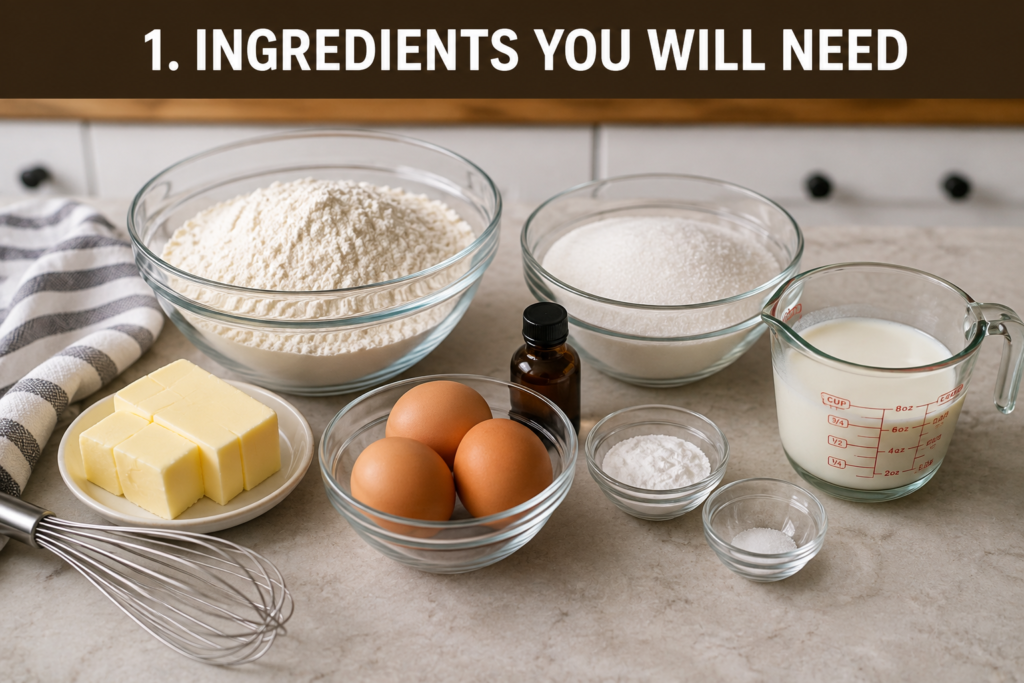
For a basic vanilla cake, you will need:
- 2 cups all-purpose flour
- 1½ cups granulated sugar
- ½ cup unsalted butter, softened
- 3 large eggs
- 1 cup milk
- 2 teaspoons baking powder
- 1 teaspoon vanilla extract
- A small pinch of salt
You will also need a cake tin, mixing bowls, a whisk or electric mixer, a spatula, measuring cups, parchment paper or butter for greasing the pan, and an oven.
If you want to make a chocolate cake, replace a small portion of the flour with unsweetened cocoa powder. For example, you can use 1½ cups flour and ½ cup cocoa powder. You may also add chocolate chips, nuts, dried fruits, or sprinkles depending on your preference.
Prepare Your Oven and Cake Tin
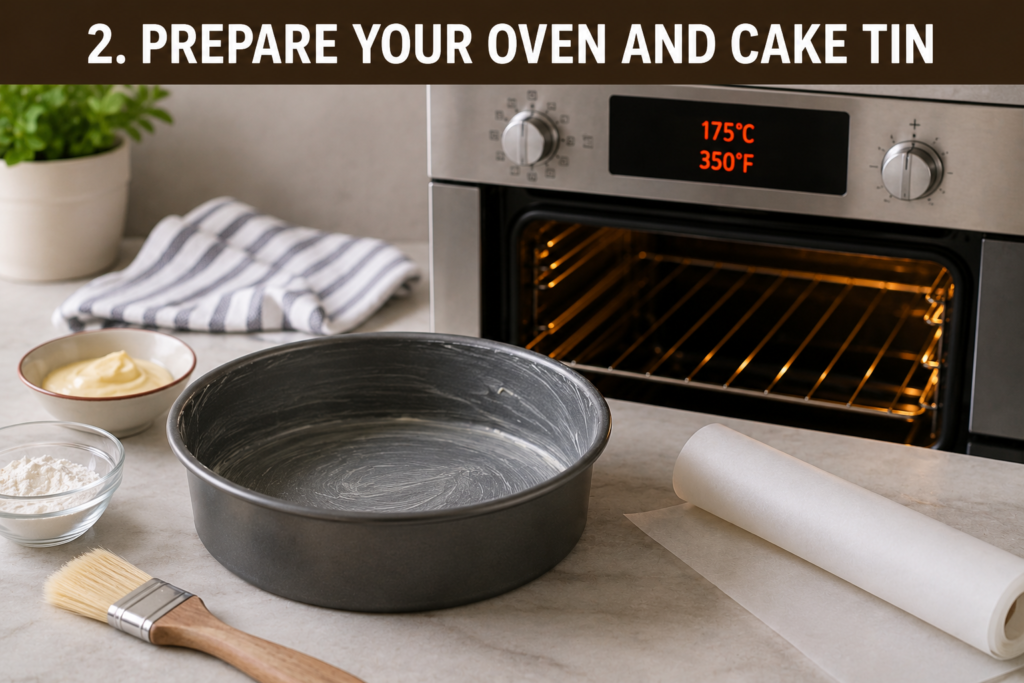
The first step is to preheat your oven. Set it to 175°C or 350°F. Preheating is important because it allows the cake batter to start baking at the correct temperature as soon as it goes into the oven. If the oven is not properly heated, the cake may not rise evenly.
Next, prepare your cake tin. Grease the inside with butter or oil, making sure to cover the bottom and sides. You can then lightly dust it with flour, removing any excess. Another option is to line the base of the tin with parchment paper. This helps prevent the cake from sticking and makes it easier to remove after baking.
A round 8-inch or 9-inch cake tin works well for this recipe. You can also use a loaf pan, square pan, or cupcake tray, but the baking time may change depending on the pan size.
Mix the Dry Ingredients
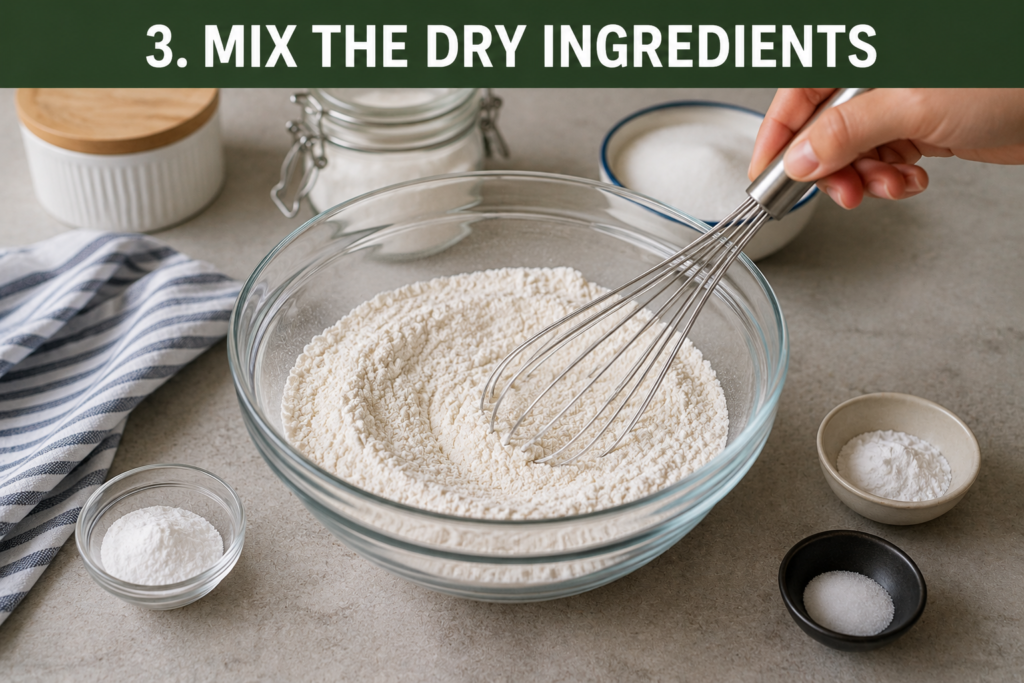
In a medium bowl, add the all-purpose flour, baking powder, and salt. Use a whisk or spoon to mix them together.
This step may seem small, but it helps spread the baking powder evenly through the flour. Baking powder is the ingredient that helps the cake rise and become light. If it is not distributed properly, some parts of the cake may rise more than others.
For an even softer cake, you can sift the flour mixture before using it. Sifting removes lumps and adds air to the flour, which can give your cake a lighter texture.
Cream the Butter and Sugar
In a larger mixing bowl, add the softened butter and sugar. Beat them together using an electric mixer or a hand whisk until the mixture becomes pale, smooth, and fluffy.
This process is called creaming. It adds tiny air bubbles into the butter and sugar, which helps create a soft and airy cake. It usually takes about three to five minutes with an electric mixer.
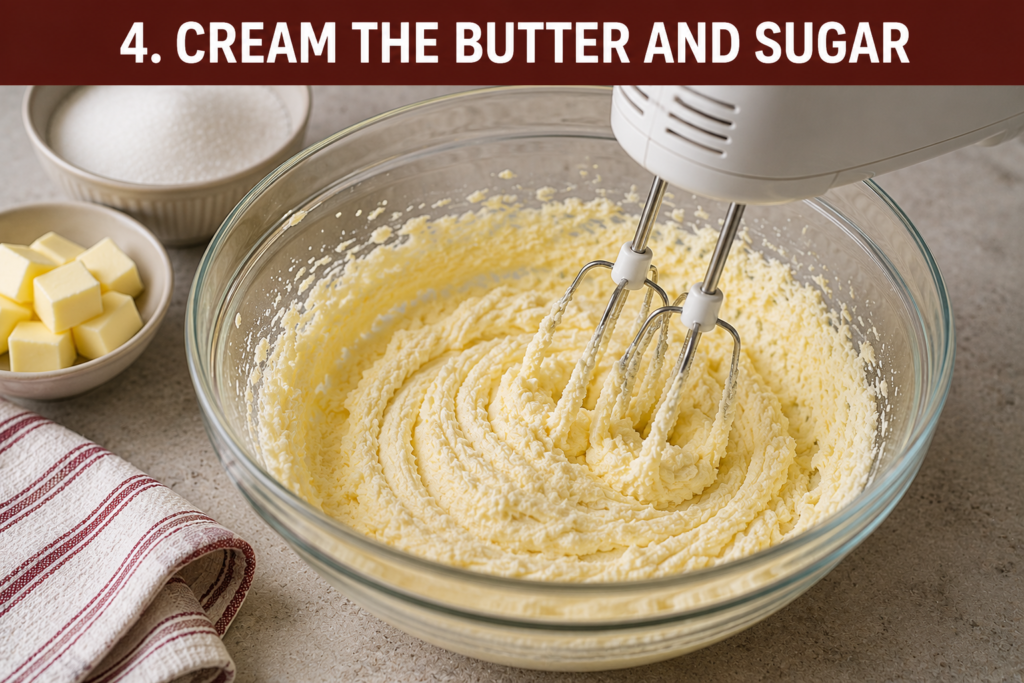
Make sure the butter is soft but not melted. Melted butter can make the batter too thin and may affect the cake’s texture. If your butter is straight from the refrigerator, leave it at room temperature for around 20 to 30 minutes before starting.
Add the Eggs One at a Time
Once the butter and sugar are well mixed, add the eggs one by one. Beat the mixture after adding each egg.
Adding eggs gradually helps the batter combine smoothly. Eggs give the cake structure, moisture, and richness. They also help the ingredients bind together.
If the mixture begins to look slightly curdled after adding the eggs, do not worry. This can happen, especially if the eggs are cold. You can add one tablespoon of the flour mixture and gently mix it in. This usually helps bring the batter back together.
After all the eggs are mixed in, add the vanilla extract. Vanilla gives the cake its classic sweet aroma and flavour.
Combine the Wet and Dry Ingredients
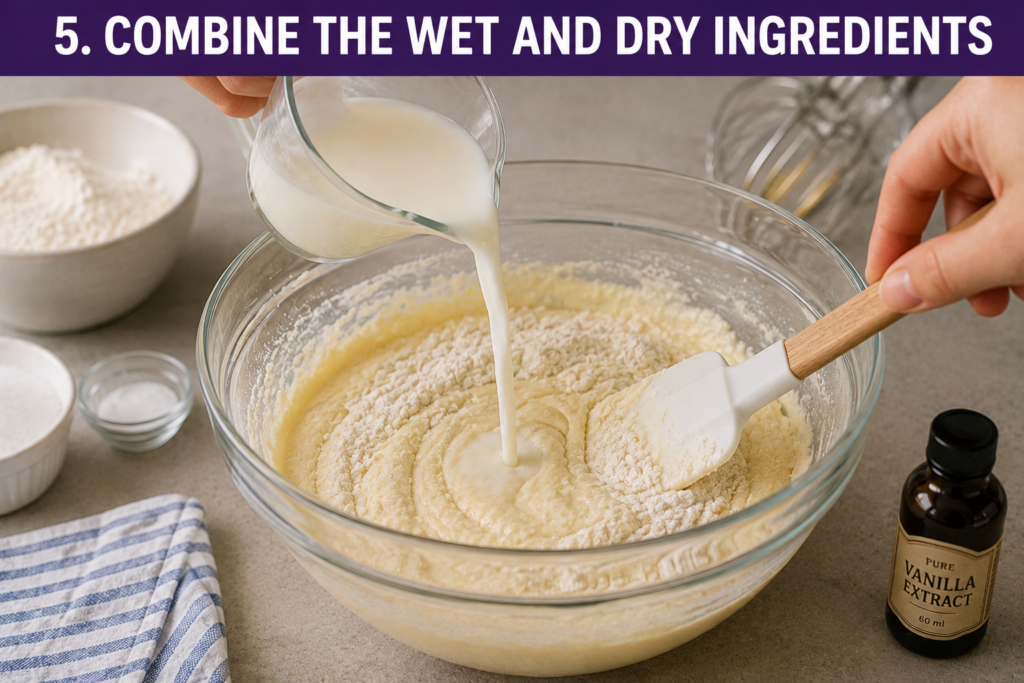
Now, add the flour mixture and milk to the butter mixture. Do this gradually rather than adding everything at once.
Start by adding a portion of the dry ingredients, then add some milk. Continue alternating between the flour mixture and milk until both are fully added. Mix gently after each addition.
Use a spatula or mix on a low speed. Avoid overmixing the batter, as this can make the cake dense, dry, or tough. Stop mixing as soon as the ingredients are combined and the batter looks smooth.
The final batter should be thick but easy to pour. If it seems too thick, you can add one or two tablespoons of milk. If it seems unusually thin, check that you measured the milk correctly.
Pour the Batter Into the Tin
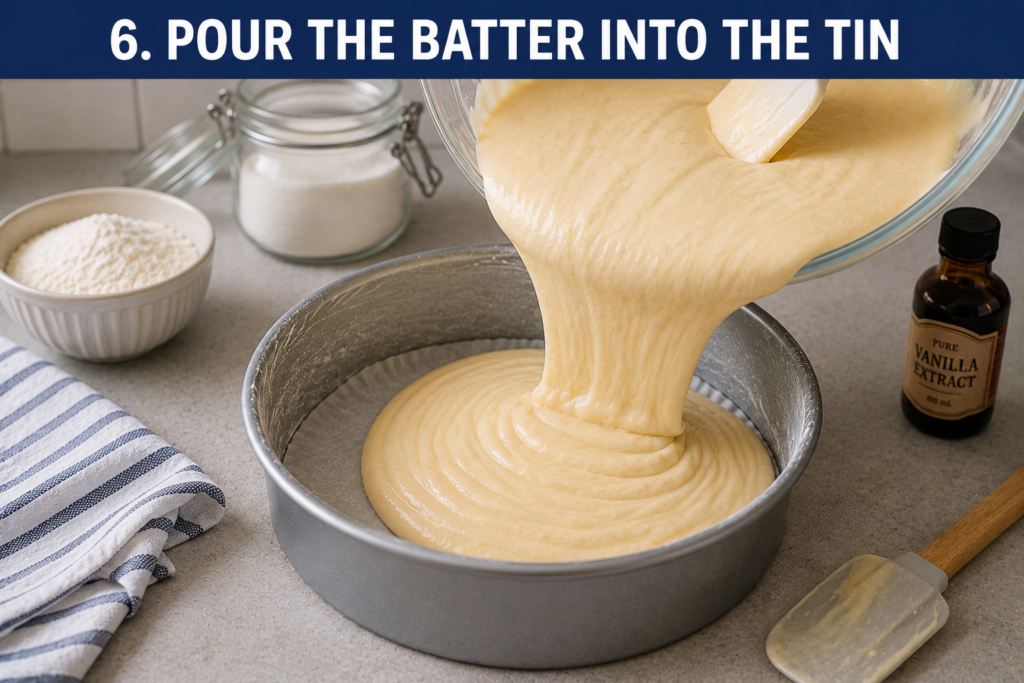
Pour the prepared cake batter into your greased cake tin. Use a spatula to spread it evenly across the surface.
Gently tap the tin on the kitchen counter two or three times. This helps release any large air bubbles trapped in the batter. Large bubbles can create holes inside the cake after it bakes.
Make sure the pan is not filled more than two-thirds full. Cakes rise while baking, and an overfilled tin can cause the batter to spill over the sides.
Bake the Cake
Place the cake tin on the middle rack of your preheated oven. Bake it for around 30 to 40 minutes.
The exact baking time can vary depending on your oven, pan size, and batter thickness. Avoid opening the oven door during the first 25 minutes, as sudden temperature changes may cause the cake to sink in the middle.
After about 30 minutes, check whether the cake is ready. Insert a toothpick, skewer, or thin knife into the centre. If it comes out clean or with only a few dry crumbs, the cake is baked. If wet batter sticks to it, bake the cake for another five to 10 minutes and test again.
The top of the cake should look golden and spring back gently when pressed with a finger. You may also notice that the edges begin to pull away slightly from the sides of the tin.
Cool the Cake Properly
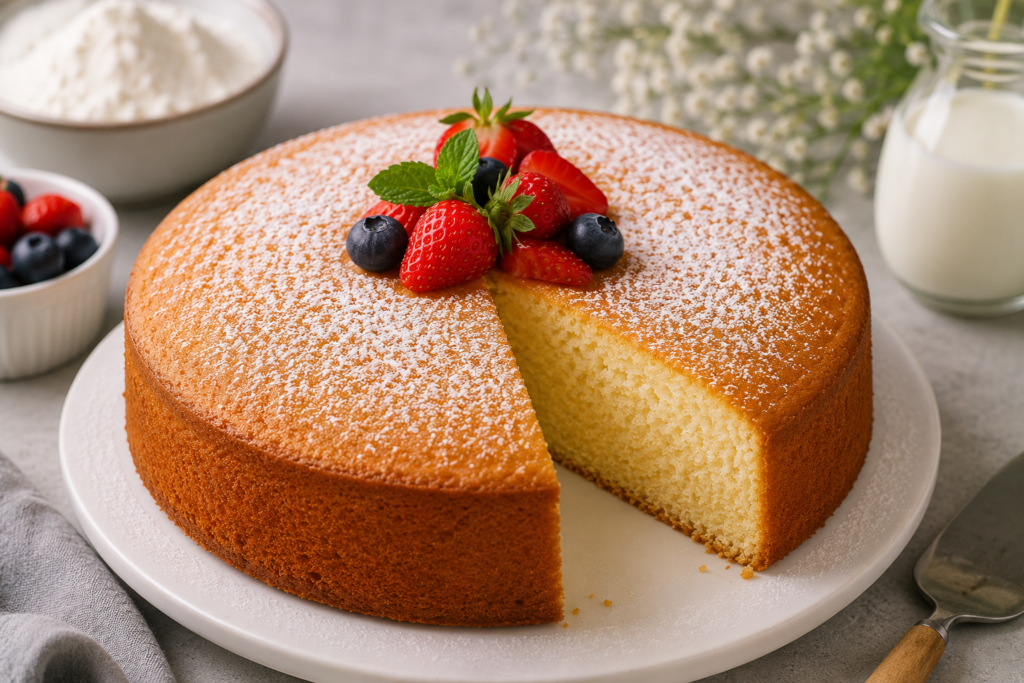
Once the cake is baked, remove it from the oven and let it cool in the tin for around 10 to 15 minutes. Do not try to remove it immediately, as it may break while still hot and soft.
After that, carefully run a knife around the edges and turn the cake onto a wire rack or clean plate. Let it cool completely before adding frosting, cream, or decorations.
Cooling is an important step. If you frost a warm cake, the icing can melt, slide off, and make the cake look messy. A fully cooled cake is easier to cut, decorate, and serve.
Easy Frosting Ideas
You can enjoy a plain vanilla cake on its own, but frosting can make it even more special. A simple buttercream frosting is easy to prepare at home.
To make basic vanilla buttercream, beat together softened butter, powdered sugar, a little vanilla extract, and one or two tablespoons of milk. Continue beating until it becomes smooth and fluffy. Spread it over the top of the cake with a spatula.
For a chocolate version, add cocoa powder to the buttercream. You can also use whipped cream, cream cheese frosting, chocolate ganache, fruit jam, or fresh berries.
If you are making a birthday cake, decorate it with colourful sprinkles, chocolate shavings, cherries, sliced strawberries, or edible flowers.
Common Cake Baking Mistakes to Avoid
- Many beginner bakers face a few common problems. The good news is that most of them are easy to prevent.
- A cake may turn out dry if it is baked for too long or if too much flour is added. Always measure flour carefully and avoid packing it tightly into the measuring cup.
- A cake may sink in the middle if the oven door is opened too early, if the cake is underbaked, or if too much baking powder is used. Follow the recipe measurements and test the cake before removing it from the oven.
- If your cake is dense instead of fluffy, you may have overmixed the batter. Once you add the flour, mix only until everything is combined.
- Uneven baking can happen when the oven temperature is too high or when the cake pan is placed too close to the top or bottom heating element. The middle rack is usually the best place for baking cakes.
Final Thoughts:
Learning how to bake a cake is a useful and enjoyable skill. Once you understand the basic method, you can experiment with different flavours, fillings, decorations, and shapes. Start with a simple vanilla cake, follow each step carefully, and do not worry if your first attempt is not perfect.
Baking improves with practice. Every cake you make teaches you something new about mixing, timing, temperature, and flavour. Soon, you will be able to bake delicious homemade cakes for yourself, your family, and every special occasion.