Last Updated: August 12, 2026
The Wisconsin governor race 2026 is becoming one of the most closely watched state elections in the United States. Wisconsin is a major political battleground where statewide races are often decided by a small number of votes. The result will decide who leads the state for the next four years and may shape policies on taxes, education, housing, health care, abortion rights, and public safety.
The general election is scheduled for November 3, 2026. Wisconsin held its partisan primary on August 11 to choose the major-party nominees. At the time this article was updated, results were still being reported and had not been officially certified. Readers should check the Wisconsin Elections Commission or MyVote Wisconsin for the newest official information.
Why the Wisconsin Governor Race 2026 Matters
Democratic Governor Tony Evers is not seeking a third term. His decision created Wisconsin’s first open governor race since 2010. Without an incumbent on the ballot, both major parties have an opportunity to offer a new direction for the state.
Wisconsin also has divided state government. The governor is a Democrat, while Republicans control both chambers of the Legislature. Because most large policy changes need support from lawmakers, this contest is closely connected to the 2026 Wisconsin Assembly and Senate elections.
The state’s political history makes the contest difficult to predict. Wisconsin voted for Donald Trump in 2016 and 2024 but supported Joe Biden in 2020. Both parties have won recent statewide races, so independent and suburban voters may be important.
Democratic Candidates in the 2026 Primary
The active Democratic field at the end of the primary campaign included Francesca Hong, David Crowley, Joel Brennan, and Kelda Roys. Several other candidates ended their campaigns, although some remained on the ballot because they withdrew too late for their names to be removed.
Francesca Hong, a Madison state representative and former restaurant owner, gained national attention with a progressive campaign focused on permanent affordability. Her proposals included child-care support, free school meals, a higher minimum wage, stronger public-school funding, and higher taxes on wealthy residents. She also supported limits on new data centers and legal marijuana. Hong attracted younger and very liberal voters, but critics questioned her general election appeal.
David Crowley, the Milwaukee County executive, presented himself as an experienced administrator with broad appeal. Governor Evers endorsed him. Crowley highlighted housing, schools, health care, child care, apprenticeships, and fewer unnecessary rules for small businesses.
Joel Brennan, a former Wisconsin Department of Administration secretary, stressed practical management and cooperation. State Senator Kelda Roys emphasized reproductive rights, affordable health care, and support for working families. Both argued that experience would matter in the governor’s office.
Republican Candidates in the 2026 Primary
U.S. Representative Tom Tiffany entered the Republican primary as the clear favorite. He received Donald Trump’s endorsement and had far greater name recognition than his main opponent, Andy Manske. Before joining Congress, Tiffany spent about a decade in the Wisconsin Legislature.
Tiffany focused on property taxes, public safety, regulation, education, and spending. He proposed freezing property taxes, reducing housing and health care regulations, supporting police, banning sanctuary-city policies, and applying work requirements to some benefits. His connection to Trump may energize Republicans but create challenges with some independents.
Manske entered as a political newcomer and received much less media attention, funding, and polling support. Still, he offered Republican primary voters another choice. The final margin in the Republican primary may offer an early sign of party enthusiasm before November.
Affordability and the Cost of Living
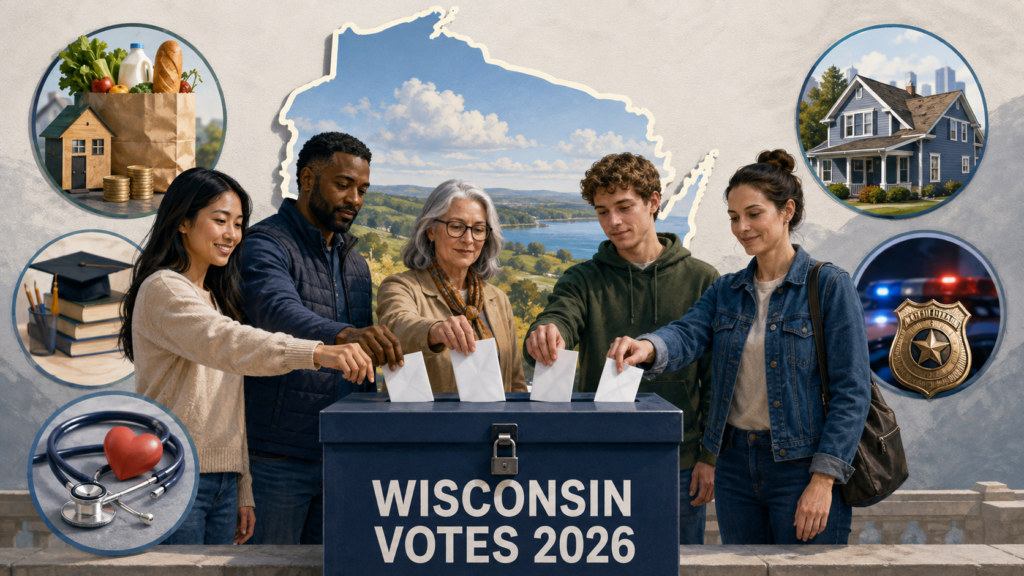
Affordability is likely to be the central issue in the Wisconsin governor race 2026. Families are concerned about home prices, rent, property taxes, food, energy, health care, and child care. Candidates from both parties agree that costs are a problem, but they recommend different solutions.
Democrats generally support more public investment, targeted tax relief, and state programs designed to lower household expenses. Republicans place greater emphasis on lower taxes, fewer regulations, and controlled government spending. Voters should compare how each proposal would be funded and whether it could pass the Legislature.
Education, Health Care, and Child Care
Education will be a major campaign subject. Democrats usually call for more public-school and special-education funding. Republicans often support school choice, stronger performance requirements, and tighter control of spending.
Health care and child care also affect family budgets and the workforce. Rural areas face hospital and medical staff shortages, while many parents struggle to find affordable care for children. Voters will compare access, cost, and funding in each plan.
Abortion Rights and Public Safety
Abortion policy remains important. Democrats generally support access to abortion and reproductive health care, while Republicans are more likely to support restrictions. Exact proposals may differ, so voters should review each nominee’s current platform.
On public safety, Republicans emphasize police support and stronger enforcement. Democrats discuss violence prevention, mental health services, and police accountability. Voters should separate current proposals from political attacks based on older statements.
What the Polls Show
Pre-primary polls suggested that several possible November matchups could be close. However, early polls are only a snapshot. Many voters had not formed a clear opinion, and several candidates were unfamiliar to much of the public. Results may change after nominees are confirmed, advertising increases, debates begin, and new events affect public opinion.
Turnout may matter as much as persuasion. Democrats need strong participation in Milwaukee and Madison while improving their results in suburbs and smaller communities. Republicans need large rural margins and strong turnout in conservative counties while remaining competitive around growing suburbs. Independent voters could decide the result if the major parties stay closely divided.
What Happens Next?
After the primary results are finalized, the nominees will raise money, release advertisements, and take part in interviews or debates. Reporters will examine their records, donors, proposals, and past statements.
Voters should use trusted sources. Official dates, registration details, polling places, and ballot information are available through the Wisconsin Elections Commission and MyVote Wisconsin. Independent reporting and nonpartisan guides can help people compare plans.
Final Outlook
The Wisconsin governor race 2026 is expected to remain competitive until Election Day. The open seat, Wisconsin’s history of close elections, and strong policy differences make an early prediction unreliable. Economic concerns may lead the discussion, but education, abortion rights, health care, public safety, and control of state government will also shape the final choice.
The candidate who connects everyday costs with a clear and believable plan may gain an advantage. Success will also depend on party unity, independent voters, campaign organization, and turnout on November 3. Until certified results and later polls provide a clearer picture, Wisconsin should be viewed as a true battleground.
Sources and Fact-Checking References
Wisconsin Elections Commission and MyVote Wisconsin for official election information; Wisconsin Public Radio and PBS Wisconsin for candidate coverage; and the Marquette Law School Poll for polling and methodology.